
 Malaysia
 Singapore
Who the e-Invoice Mandate Actually Covers
Malaysia’s e-Invoice system, run through LHDN’s MyInvois platform, rolled out in phases based on annual turnover rather than hitting every business at once. The largest companies came under the mandate first, back in August 2024, with each subsequent phase covering smaller turnover bands through 2025 and into 2026. Most Malaysian F&B outlets, cafés and retail shops fall into the phase covering businesses with turnover between roughly RM1 million and RM5 million, which became mandatory from 1 January 2026.
Businesses under RM1 million in annual turnover are currently exempt, though that exemption threshold has already been revised once and is worth checking against current LHDN guidance rather than assumed to be permanent. LHDN has also granted relaxation periods at the start of each phase, giving businesses time to get compliant without facing penalties immediately, though the length of that relaxation window has shifted as rollout dates have been adjusted. Because these thresholds and dates have moved more than once already, the safest approach for any specific business is to confirm its exact phase and deadline directly with LHDN or a tax advisor rather than relying on a general date.
What e-Invoice Actually Requires
An e-Invoice is not simply a PDF invoice emailed to a customer. It is a structured document, submitted to LHDN’s MyInvois system and validated in near real time, before it’s considered a valid invoice under the mandate. Each e-Invoice needs to include a defined set of fields, covering both the business and the customer’s tax information, and once validated, it carries a unique identifier confirming that validation took place.
One detail that catches SMEs off guard is the treatment of individual, higher-value transactions. As of 1 January 2026, transactions above RM10,000 require an individual e-Invoice rather than being grouped into a daily consolidated invoice, which changes how a business needs to capture invoice data at the point of sale for larger purchases specifically.
Non-compliance is not a minor administrative issue. Failing to issue a valid e-Invoice can carry a fine per instance, and because each non-compliant invoice counts as a separate offence, the exposure adds up quickly for a business processing dozens or hundreds of transactions a day.
Why This Is a POS System Problem, Not Just an Accounting One
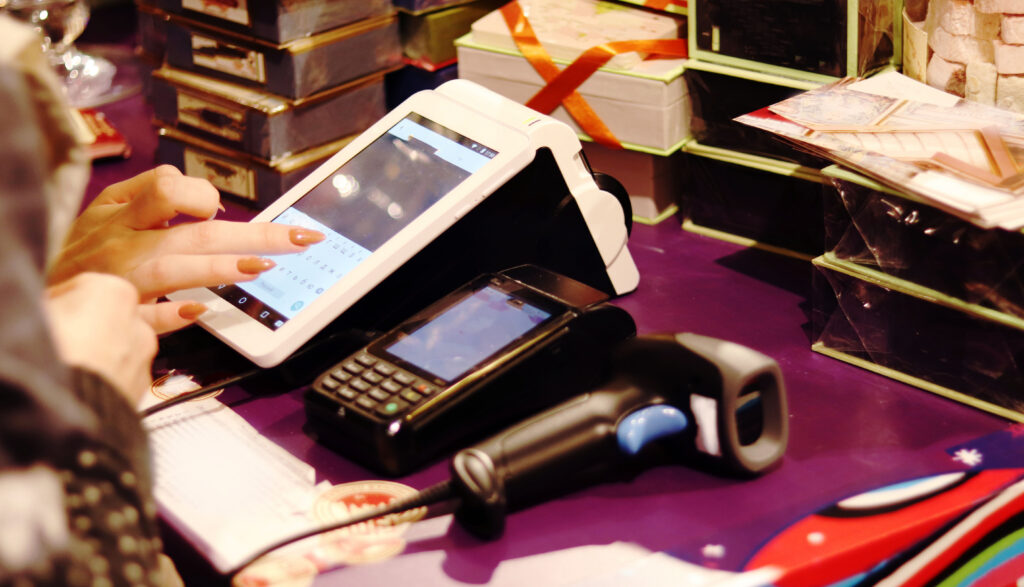
For a business already using accounting software, e-Invoice compliance is partly solved at the back end. But the data an e-Invoice needs, customer tax identification details, itemised pricing, transaction timing, has to be captured somewhere first, and for most SMEs that point of capture is the till, not the accounting system.
A POS system that only records a sale as a total amount pushes the burden of reconstructing compliant invoice data onto whoever handles accounts at the end of the month, which is slow and prone to errors, particularly for the RM10,000 individual invoice rule where the details matter more than they did under fully consolidated reporting. A POS system that captures structured, itemised transaction data as the sale happens removes that reconstruction step entirely, since the information needed for a compliant e-Invoice already exists in the right format by the time it needs to be submitted.
What to Check in a POS System Before the Next Phase Hits
Not every POS system on the market was built with structured invoice data in mind, since many were designed before e-Invoice existed as a requirement. A few practical things are worth confirming with any provider, including EPOS360, before assuming a current setup is ready.
Whether the system captures itemised transaction data by default, rather than only a daily total, matters most, since that’s the raw material any e-Invoice submission depends on. Whether customer tax details can be captured at the point of sale for transactions that need them, particularly for the RM10,000 threshold, is the next practical question, since retrofitting that capture after the fact is far harder than building it into the checkout flow from the start. And whether the system’s reporting can be exported in a format that an accounting team or e-Invoice submission tool can actually work with, rather than a flat sales summary, determines how much manual re-entry compliance ends up costing every month.
A POS system built around structured, itemised sales data, which is the same foundation EPOS360 uses for its payment, delivery and loyalty reporting, is generally in a stronger starting position for e-Invoice readiness than one built purely around till totals, though the specific submission pathway to MyInvois is still worth confirming directly for a given setup.
Getting Ahead of the Next Deadline
The businesses that handle each e-Invoice phase with the least disruption tend to be the ones that treat it as a data problem to solve early, rather than a deadline to react to once penalties are already a real risk. Checking now whether a current POS system captures the right data at the point of sale is a smaller task than trying to fix it during the same month a new phase becomes mandatory.
This article is a general overview and not tax or legal advice. Businesses should confirm their exact phase, deadline and obligations directly with LHDN or a qualified tax advisor, since thresholds and relaxation periods have changed since the mandate was first announced and may change again.
Book a demo to see how EPOS360 captures transaction data at the point of sale, or start a trial through the EPOS360 console.