
 Primal SEO Agency
Key Takeaways:
- A retail POS tracks physical items from stock-in to the point of sale, which is a different job from managing recipes, tables or appointments.
- Restaurants set items up with modifiers. Shops set them up with variants, where every version of a product carries its own barcode and its own count.
- Running a shop on restaurant software pushes staff to record options as modifiers, which breaks automated stock tracking.
- Salons run on calendar slots and staff availability, so they need appointments, commission and prepaid balances on top of ordinary stock control.
- A live demonstration using your own products tells you more than any feature list or monthly price comparison.
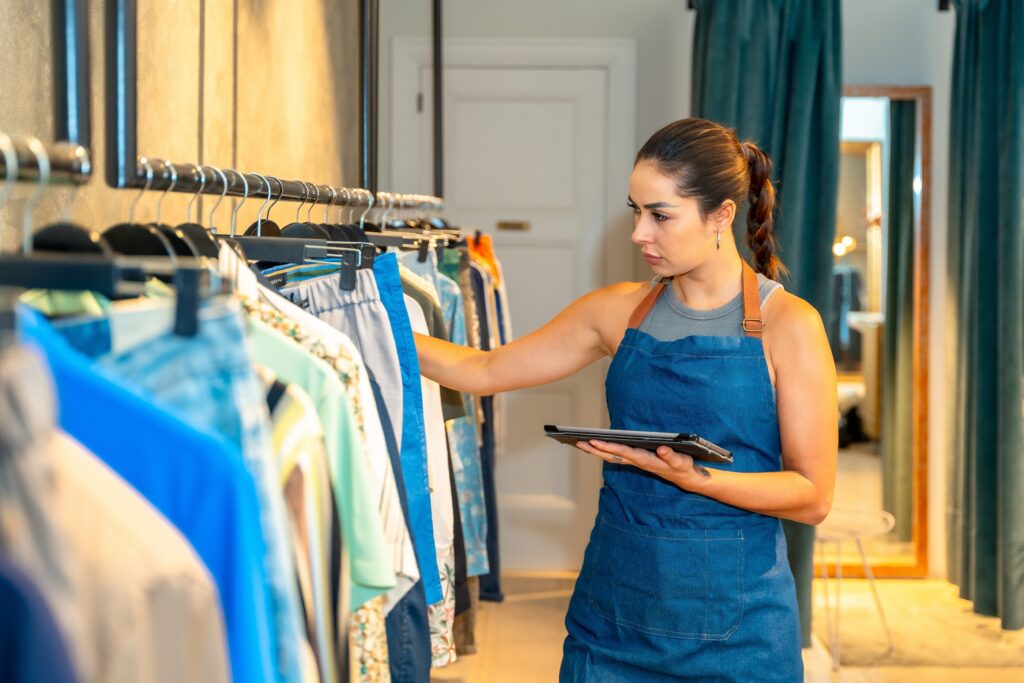
A retail POS system in Malaysia tracks physical items from stock-in to the point of sale. While F&B outlets manage recipes and tables, and salons manage appointments and staff, retail shops deal with large catalogues, item variants and purchase orders. Running a store on software designed for a restaurant or a salon creates daily operational headaches.
What a Retail POS System Actually Does
A retail POS processes transactions and keeps track of stock on hand. It handles four core tasks at the counter:
- Catalogue management. Organising products so that every version of an item gets its own barcode and stock count.
- Checkout and payments. Accepting cards, DuitNow QR, e-wallets and cash.
- Inventory control. Deducting stock as items sell and updating levels when new shipments arrive.
- Reporting. Showing sales figures, busy trading hours and product margins.
These tasks are straightforward on their own. Problems tend to surface only during daily use, which is why they are worth understanding before choosing a system.
Why a Shop Counter Needs Different Tools
Restaurants set items up using modifiers, such as adding extra cheese or choosing a drink for a set meal. Retail stores set items up using product variants, where each size, colour or style is a distinct stock-keeping unit. A medium black T-shirt has its own barcode and inventory count, separate from a large white T-shirt.
If a shop uses a restaurant POS, staff end up recording options as modifiers instead of distinct items with their own barcodes. Automated tracking breaks at that point, and the count on screen drifts away from what is actually on the shelf.
That costs money twice over. An order fails because the item a customer paid for is not where the system said it was, and a line runs out before anyone reorders it because nothing flagged it as low.
Retail POS and F&B POS Side by Side
Both systems take the same payments and issue the same receipt, so the real differences sit elsewhere. The table below sets out where a shop and a restaurant part company in daily operation.
| Retail POS | F&B POS | |
| Longest setup task | Loading hundreds of items, each with its own barcode and stock count | A concise menu, with recipe modifiers such as less ice or extra cheese |
| Hardware at the counter | Barcode scanner, label printer, and till terminal | Kitchen display screen (KDS) or kitchen printer, order tablets, and till |
| How cost per sale is known | Purchase price paid to the supplier for each finished SKU | The cost of the ingredients used in the dish |
| What the reports show | Sell-through rate, fast vs. slow-moving stock, and dead inventory | Table turnover, covers served, peak hours, and kitchen food wastage |
Why Salons Need a Different Kind of POS
Unlike traditional retail, service businesses operate around appointment slots and staff schedules rather than physical inventory. Consequently, a POS system for a beauty salon in Malaysia must incorporate specialised features tailored for front-desk operations:
- Appointments by named staff member. A booking belongs to a stylist rather than to a chair, because the customer is choosing the person.
- Commission per staff member. Split between services performed and products sold, and calculated by the system rather than in a notebook at month-end.
- Prepaid packages and credit balances. A customer who paid for ten sessions upfront should have the remaining balance on screen the moment they arrive.
Barbers, nail bars and independent fitness studios rely on the same three features. Most salons also sell shampoo and styling products over the counter, so ordinary retail stock control sits on top of all of it.
How to Find the Right POS Provider
Most comparisons stop at the monthly price, which tells you very little. The questions below surface the costs and constraints that only become obvious once the system is installed.
- How much hardware the counter actually needs. A till screen, a card terminal, a QR standee and a separate soundbox mean four things to rent, maintain and fit on a crowded counter. Ask whether one terminal consolidates cards, QR and audio confirmation, and whether digital receipts are supported.
- Which payment methods are included from day one. Cards, DuitNow QR across the banking apps and TNG eWallet should sit in the standard plan. Ask what happens when a new wallet is added later, and whether tourist-facing methods are covered.
- How long setup takes, and who does the work. Getting your product list into the system is the largest job in any changeover. Ask how items are loaded, who loads them, and whether it is billed separately.
- What you can see when you are away from the counter. Cloud reporting on a phone is the difference between knowing the day’s takings at 4pm and finding out at close.
- How the plan changes as you grow. A second outlet or a second terminal should have a known price before you sign, not after.
Then ask for a live demonstration using your own product list rather than a prepared sample. A supplier confident in the system will agree without hesitation.
How EPOS Fits the Way Your Business Runs
Choosing a system built for retail or salon operations keeps inventory figures accurate and checkout queues moving. Software matched to your trade cuts stocktaking mistakes and reduces the daily admin that builds up around them.
EPOS360 brings payments, order management and reporting into one place, with DuitNow QR, TNG eWallet and card payments running through a single hub. BlueTap combines the card terminal, QR display and soundbox in one compact device, so the counter carries a single payment unit rather than several.
Shortlisting POS system software in Malaysia is far easier once you have seen it handle your own products. Book a demonstration with EPOS today to see what a single terminal replaces.
References:
8.44 Billion Transactions Processed in 2025 as Digital Payments Become Malaysians’ Preferred Way to Pay. Retrieved 22 October 2026, from https://paynet.my/about-us/media-centre/press-release/8-44-billion-transactions-processed-in-2025-as-digital-payments-become-malaysians-preferred-way-to-pay.html
Frequently Asked Questions About Retail POS System Malaysia
Is a POS system important for a retail store?
It changes two things: accuracy and time. One record of what is in stock and what has sold means reordering is based on figures rather than memory, and the day’s takings are visible without counting the drawer. Gaps between recorded and counted stock also surface while they can still be traced, and the reports show which lines carry margin and which are quietly tying up cash.
When does a retail store need a POS system?
Usually at one of three points: when the stock count stops matching the shelf, when someone other than the owner starts working the till, or when a second outlet opens. A small stall selling a handful of items from a cash box can manage without one. Once a shop carries hundreds of lines, accepts cards and QR, and needs to know what sold while the owner was away, written records stop being reliable.
Can a salon use a retail POS system?
It will take payment, but it will not book an appointment against a stylist, calculate commission or hold a prepaid package balance. Salons that also sell products need both sides, so look for a system that runs appointments and retail stock together rather than choosing one over the other.
What is the best POS system for small businesses in Malaysia?
Start from what you sell rather than from a feature list. A shop should judge a system on variants, barcode scanning and returns. A salon should judge it on appointments, commission and prepaid balances. A restaurant needs modifiers and kitchen routing. Payments and reporting are broadly similar across suppliers, so the trade-specific half is where the real difference sits.


 Malaysia
 Global
 Singapore