
 Krystine
Why Cloud Kitchens Need a Different POS Setup
A cloud kitchen, sometimes called a dark kitchen or delivery-only brand, operates entirely on delivery and pickup orders, with no dine-in space and often no customer-facing counter at all. This changes what a POS system needs to prioritise. Table management, dine-in bill splitting and floor staff workflows, all standard requirements for a full-service restaurant, are simply irrelevant here. What replaces them is a much heavier reliance on order accuracy from delivery platforms, kitchen ticket speed, and often, managing several separate brands cooking out of the same physical kitchen.
A POS system built primarily around dine-in service tends to carry features a cloud kitchen never touches while under-serving the parts of the operation that matter most, which makes evaluating a system for this specific model different from evaluating one for a typical restaurant.
Multi-Brand Order Handling
Many cloud kitchens run more than one brand out of a single kitchen, sometimes several virtual restaurant concepts sharing the same equipment and staff, each listed separately on delivery platforms. This is one of the more distinctive operational patterns of the cloud kitchen model, and it puts specific demands on a POS system that a single-brand restaurant never encounters.
Orders from each brand need to be clearly distinguishable on the kitchen ticket, since preparing the wrong brand’s packaging or branding on an order is an easy mistake when multiple concepts are running simultaneously. Reporting needs to separate performance by brand as well, since a cloud kitchen operator needs to know which concept is actually generating revenue and which is underperforming, not just an aggregated total across everything cooked in the kitchen that day.
Delivery Platform Accuracy as the Core Function
For a dine-in restaurant, delivery integration is one useful feature among several. For a cloud kitchen, it’s close to the entire function of the POS system, since virtually all revenue arrives through GrabFood, Foodpanda or a similar platform rather than walk-in traffic. This shifts what matters most in a POS system evaluation. Order accuracy, making sure every item and modifier from a delivery platform lands correctly on the kitchen ticket without manual re-entry, becomes the single most important function rather than one feature among many.
Speed matters more here than in most dine-in settings too, since a cloud kitchen’s entire customer experience is judged on how quickly food is ready for a rider to collect, with no ambience, service or dine-in experience to offset a slow kitchen. A POS system that adds friction between an order arriving and a ticket reaching the kitchen has a more direct impact on a cloud kitchen’s core metric than it would for a restaurant balancing delivery against dine-in.
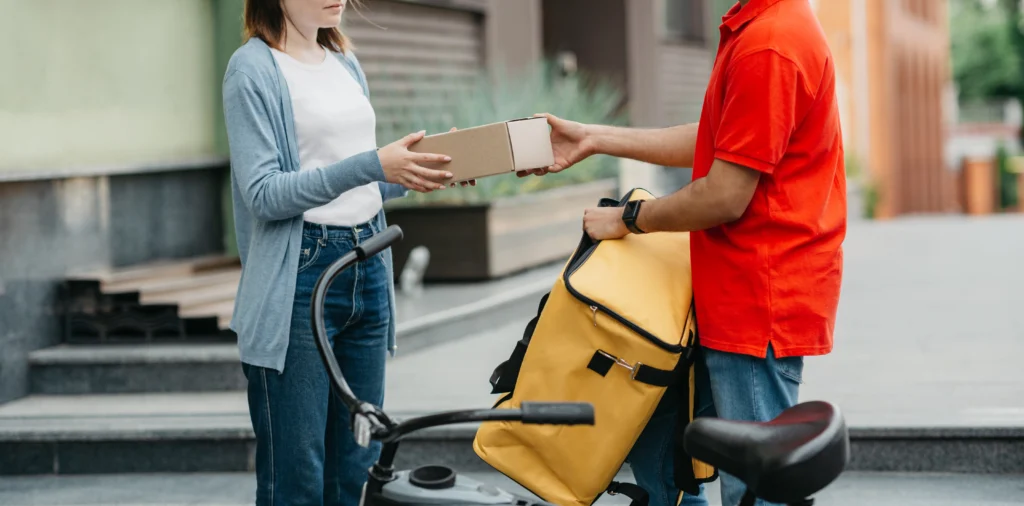
Rider wait time specifically is worth watching as a distinct number from general order fulfilment speed, since a rider standing at a pickup counter waiting on a delayed order affects a cloud kitchen’s standing with delivery platforms directly, not just customer satisfaction. Several platforms factor pickup delays into how prominently a listing appears in search results within their app, which means slow tickets can quietly reduce order volume over time in a way that isn’t always obvious from daily sales figures alone.
Stock and Menu Complexity Across Brands
Running multiple brands from one kitchen usually means overlapping ingredients, a shared base of proteins, sauces or produce used across several separate menus, which makes stock tracking more complicated than a single-brand operation. A POS system needs to track stock at the ingredient level, not just the finished item level, so that selling a dish under one brand correctly reflects against the same shared stock a different brand’s dish also draws from.
Without this, a cloud kitchen risks a common and specific failure mode: one brand showing an item as available while the shared ingredient it depends on has actually run out because another brand used the last of it, leading to an order accepted that the kitchen then can’t fulfil.
This kind of failure is more costly for a cloud kitchen than for a dine-in restaurant, since there’s no server or host to catch the problem before it reaches the customer. A dine-in restaurant might notice a shortage when a server checks with the kitchen before confirming a table’s order. A cloud kitchen has no equivalent checkpoint, since the order is accepted and confirmed automatically the moment it arrives from the delivery platform, which makes accurate, shared stock tracking closer to a requirement than a nice-to-have.
What This Means When Choosing a System
A cloud kitchen evaluating a POS system should weigh delivery integration depth and multi-brand handling far more heavily than table management or dine-in features that will likely go unused. The right questions during a demo are specific to this model: how cleanly the system separates orders and reporting across multiple brands, how accurately it handles high delivery volume without manual intervention, and how stock tracking works when several brands draw from shared ingredients.
EPOS360’s delivery integration and stock tracking are built to handle exactly this kind of order volume and complexity, whether a kitchen runs one brand or several under the same roof. For a cloud kitchen operator, the practical test is running actual delivery order volume through a trial and checking whether tickets, stock and reporting hold up cleanly across every brand being run.
Book a demo to see how EPOS360 handles multi-brand delivery order flow, or start a trial through the EPOS360 console.

 Malaysia
 Global
 Singapore